
On Aug. 3, 1921, Army Air Corps pilot Lieutenant John A. Macready, piloting a specially modified Curtiss JN4 Jenny, spread lead arsenate over a six-acre grove of 6,000 catalpa trees at Postmaster Harry Carver’s farm in Troy, Ohio. The Catalpa trees were destined to be harvested for railroad ties and fence posts. The plane, fitted with a small makeshift hopper (a metal container) and a release mechanism attached to the side of the plane, flew 20 to 35 feet over the orchard, spreading the powdered insecticide in an attempt to kill caterpillars eating the leaves of the trees. Macready relied on the wind and currents from the propeller to carry the poisonous power to the rear of the plane and then down to the grove. The plane landed five times to refill the hopper. The dusting proved successful, demonstrating a plane could do in minutes what it would take ground-based workers days to complete.
Last week, local farmers got a close-up look at the next generation of agriculture technology.
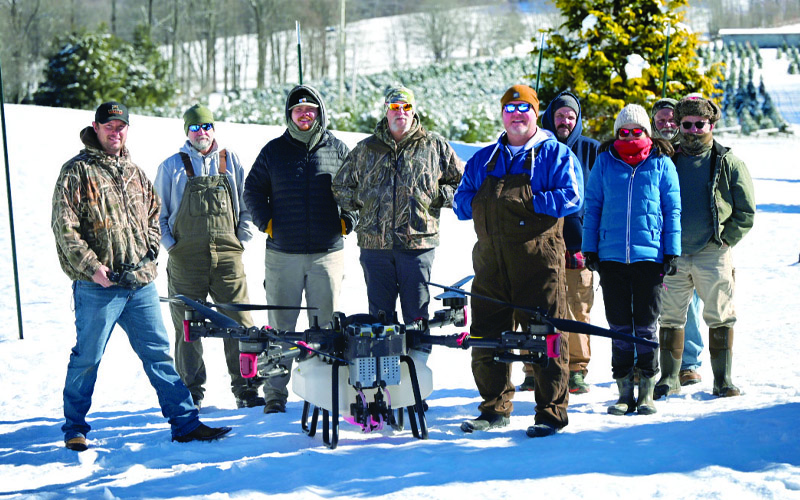
Shane Biddix of the Mitchell County NC Extension collaborated with AG-Tech Drone Service to host a drone demonstration on Wednesday, Jan. 17. The event, attended by local farmers, showcased the transformative potential of drones in enhancing agricultural practices.
Jordan Dornan, the owner and operator of AG-Tech Drone Service, led the demonstration. With over a decade of experience as a crop duster and professional applicator, Dornan has honed his expertise in aerial application, working closely with farmers and agronomists to develop integrated pest management strategies tailored to each farmer’s unique needs.
“AG-Tech Drone Service brings a new dimension to crop care by utilizing advanced drone technology to overcome the limitations of traditional methods like crop dusting and ground rigs,” said Dornan. “These drones can access hard-to-reach areas that are challenging for tractors and even airplanes or helicopters due to obstacles such as power lines and trees.”
Farmers at the event witnessed firsthand how these drones could expedite and improve pesticide and fertilizer applications. This technology promises not only increased efficiency and safety but also a boost in profit margins by reducing labor costs and enabling rapid disease diagnosis in crops.
“This is where the future of agriculture is going, from row crops to tree farms and even pumpkin patches,” said Biddix, emphasizing the significance of this technological leap.