
Sarah Atkins
mnjreporter@gmail.com
Mike Carpenter, a staff member at Warren Wilson College Field School, gave a presentation on the topic of a Spanish European settlement located near Morganton to the Mitchell County Historical Society last week.
This was the Historical Society’s second-to-last program of the summer.
Carpenter is a volunteer archeologist with The Exploring Joara Foundation, a nonprofit organization; its mission is “dedicated to educating and engaging the public through hands-on archeology and history, programs, events, and opportunities to discover our diverse cultural and historical past.”
Carpenter’s presentation began with a history of European expeditions in the Americas. From Juan Ponce de León in 1513 to Juan Pardo in 1566, Carpenter briefly covered the expeditions of several Spanish conquistadors. One of these, Hernando De Soto in 1539, encountered a town he called “Xuala.”
Pardo also encountered the town De Soto was believed to be referring to, yet he spelled it “Joara.” Pardo led two expeditions from Santa Elena, the first began in December of 1566.
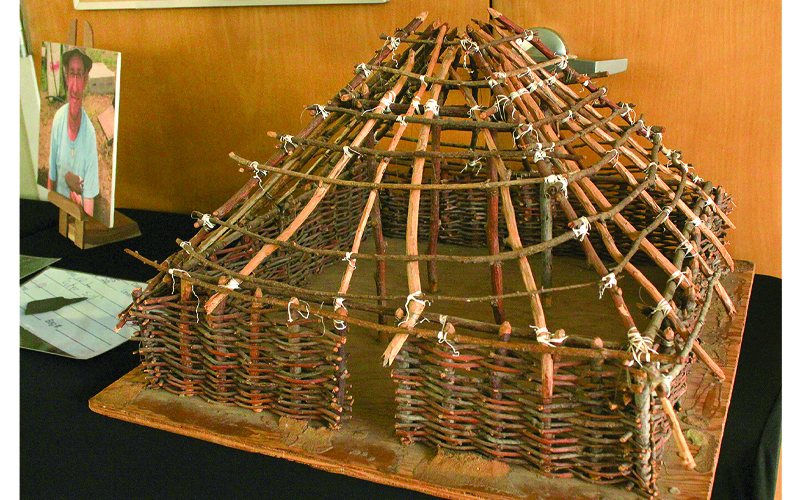
During his first expedition, Pardo left 30 men to build a fort near the Native American town of Joara to provide protection from the French. He declared the native people there as subjects of Spain and ordered them to build five houses.
Fort San Juan and the five houses were constructed in 1567 near modern-day Morganton, 20 years before the establishment of Roanoke and 40 years before Jamestown.
According to Carpenter, Pardo’s second expedition started with the goal of finding an overland trail from Santa Elena to Spanish silver mines in Mexico. During this expedition, Pardo was made aware of a rumor that he would be attacked by native people. He fled to Santa Elena and arrived there in the spring of 1568.
Around that same time, several of the settlements that Pardo had established on his expeditions were attacked and destroyed. One man survived and was able to make it back to Santa Elena, claiming he was able to do so by hiding during the day and traveling at night. It is now known that the lone survivor had married a native woman and was likely allowed to live by the natives who attacked the town.
Though Fort San Juan was destroyed, a Native American settlement remained in the area. In 1670, German explorer John Lederer wrote about a large native town he called “Sara,” likely referring to Joara.
Over two centuries later in 1986, a man named David Moore found a piece of non-native pottery in the area near Joara. Another man, Dr. Rob Beck, found similar non-native pottery on his aunt and uncle’s farm that an expert identified as part of a Spanish olive jar. As the Spanish did not trade olive jars, these findings suggested that a Spanish settlement once existed in the area, a settlement now known to have been Fort San Juan.
Beck and Moore have since established themselves as avid archeologists and assist in Warren Wilson’s Field School program that began in 2001. The field school takes place across seven acres that belong to the family of Beck’s aunt and uncle, Pat and James Berry for four weeks in June of each year.
Much remains to be excavated at what is known as the Joara or Berry Site. Carpenter hopes that the program inspires people to “learn more about the history of our interaction with native people and strive to be tolerant and accepting of diverse culture.”