
A lifetime of sewing
Sarah Atkins
mnjreporter@gmail.com
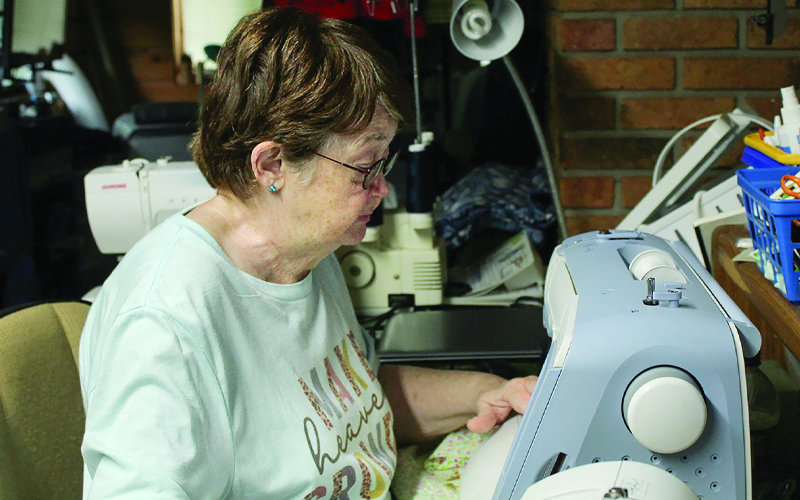
With a kind smile, she opened the door of her home. Her demeanor radiated that of a true Southern woman, one who knows your neighbor and your neighbor’s mama. Her house was neat, and as she moved through the house to her workroom, the place where the magic happens revealed itself.
Ribbons hung from the ceiling, and drawers full of thread arranged themselves neatly under tables bearing the weight of several sewing machines. Dresses were carefully hung in protective bags, waiting to be worked on or picked up by their owners. Shelves were stacked with boxes of supplies that made themselves useful for one project or another.
Ina Hilemon began her sewing and alterations business 38 years ago when the clothes she would make for her daughters caught the attention of a teacher she babysat for. From there, word of her services spread from mother to mother and house to house; Hilemon never had to advertise her business.
Hilemon was taught how to sew by her mother, Nola Garland.
“I watched my mom sew from 3 years old on,” she said.
One year, Hilemon asked her mother for a sewing machine but was disappointed to discover a toy one sitting under the tree on Christmas morning. When she was 12, she received her very first, and very real, sewing machine, a Singer that could only do a straight stitch.
Hilemon has developed many skills from sewing.
“You don’t have to do just one type of sewing, there are multiple ways of being creative,” she said. Hilemon enjoys that sewing is “not just one thing. I may be at the embroidery machine or the doll clothes.”
Luckily for Hilemon’s many projects, she has many sewing machines to complete them on. With around 20 sewing machines and five embroidery machines, Hilemon can rotate from job to job and create an efficient work environment.
The amount of time it may take Hilemon to complete a project varies, but each one must gain her hard-earned approval before being returned to the owner. She has spent up to five hours cutting just one layer from a wedding dress, ensuring there are no mistakes. “I take a lot of pains to do as good a job as I can do,” Hilemon said.
Hilemon’s pro tip for sewing is to avoid taking steps that can’t be undone.
“Once you’ve cut something you’ve cut it,” Hilemon warned.
Hilemon stays busy with projects from the tri-county area year-round. She believes the people who come to her with projects may not always have the time, motivation, or skills to do these jobs themselves. Sewing is also no longer taught in schools, causing younger generations to be less familiar with the art.
Customers bring Hilemon many kinds of projects, “anywhere from zippers in blue jeans to prom and wedding dresses.”
She said one of her favorite parts about doing alterations is seeing “when the young bride tries on her dress or the prom dress and it’s what they want.”
Hilemon said she would continue doing alterations for people “as long as I can see and my fingers move — I’m terrified of boredom.”
Hilemon finds solace in keeping herself busy with a skill she enjoys and still has so much more to learn from.