
Western NC community at the “end of the line” takes care of its own
Brian Brodrick
Special Correspondent to the Mitchell News-Journal
Helene might have met her match in Buladean.
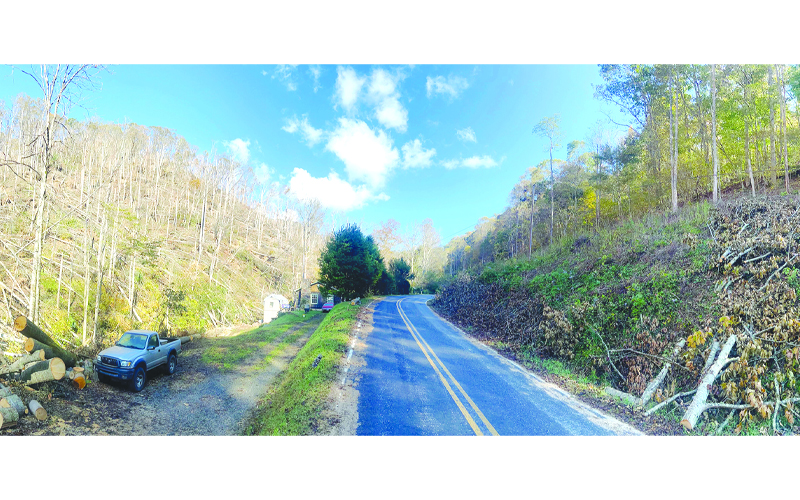
At dawn on Sept. 27 the big storm threw a nasty haymaker at Western North Carolina, laying down timber on ridges from the Roan Bald to the Iron Mountain, flooding creeks and rivers across Mitchell County, and destroying roads, bridges and driveways. The number of dead and injured is unknown at this point
Buladean Community took the punch and stood right back up, bruised, battered and remarkably brave, like the mascot of its former elementary and middle school.
“It’s been neighbor for neighbor for the past eight days,” said Luke Phillips, who has been volunteering and coordinating at Beans Creek Church of Our Lord and Savior Jesus Christ. “Never in my life have I seen this happen. To see mountains and hills laid down as far as you can see it is unreal. But the love that has been shown is unbelievable.”
Up and down small roads across the community, neighbors in need have been served by friends, churches and a surge of donations from across the southeast. Driveways and roads cleared by neighbors. Food delivered in side by sides by teenage volunteers. Trees taken off of roofs. Retirees delivering to shut-ins and widows. The stories don’t stop.
Misty Coleman is the communications director and food access coordinator for the Buladean Community Foundation. The foundation is housed at the Buladean Community Center, where hot meals are being offered daily and large deliveries of food, supplies and even hay are being distributed directly to those in need and to local churches and other distribution points.
“At the outset, Buladean took care of its own. Our firefighters cut their way in and cut their way back out,” said Coleman. “Since then the sheer amount [of donations] is impressive and we are grateful to have the space to store it.”
“We are literally the end of the power grid,” Coleman added, noting that the greatest need in the months ahead will be a generator and heat for every home as temperatures cool and they wait what might be more than a month for power to be restored. “We know we are the end of the line.”
Coleman and her team are also still seeking a consistent team of volunteers to keep the donated goods organized and distributed and are seeking industrial shelving to store the influx of food, supplies, and paper products.
Others in the community are seeking a more modern invention - Starlink systems that allow them to use phones and computers to reach families, pay bills, and communicate with the outside world without traveling to Tennessee or a community center to get access to a signal.
Old timers remember cyclones, storms and blizzards of the past, but Mitchell High School history teacher Matthew Hurd says the high winds set this storm apart.
“When I was growing up in Buladean I’ve heard teachers talk about the flood of 1901, said Hurd, a Marine veteran and Beans Creek Road resident. “This time, we didn’t get the flooding, we got the wind.”
The wind was devastating. Rare is the home that didn’t sustain some damage. Some mountains and ridges have lost more than 80 percent of their standing timber. Others, just across a valley, might be untouched.
Initial projections from the state indicated it might be two weeks before state and local roads reopened due to downed trees. But they weren’t counting on the chainsaws, tractors, trackhoes and skid steers of this fiercely independent community.
One local man - Kenneth Lingerfelt - spent 11 hours traveling from Spruce Pine across the Iron Mountain to Limestone Cove, Tenn. clearing roads as he and his crew traveled. Other volunteers worked similarly, clearing Fork Mountain, Hughes Gap, Pine Root, Battle Branch and other roads, ensuring neighbors could get the help they need. In the end, two weeks became just a few days.
But even as state and federal aid begins to stream in, the financial, emotional and personal damage is likely to linger for years as residents rebuild homes, barns and lives. Coleman knows it will be a long journey and is grateful for the supplies that can sustain the community as it recovers.
“We are in this for the long haul,” said Coleman, before she briefly posed for a photo and went back to work. Down the hall 30 people were eating a warm meal, pallets of water and supplies waited outside, helicopters thumped across the sky and trailers of hay were inbound from Tennessee. She is hoping that most precious asset - generators with fuel and extension cords - arrives next.
But taking care of neighbors is nothing this small community can’t handle. After all, it has already handled the worst of Helene.