
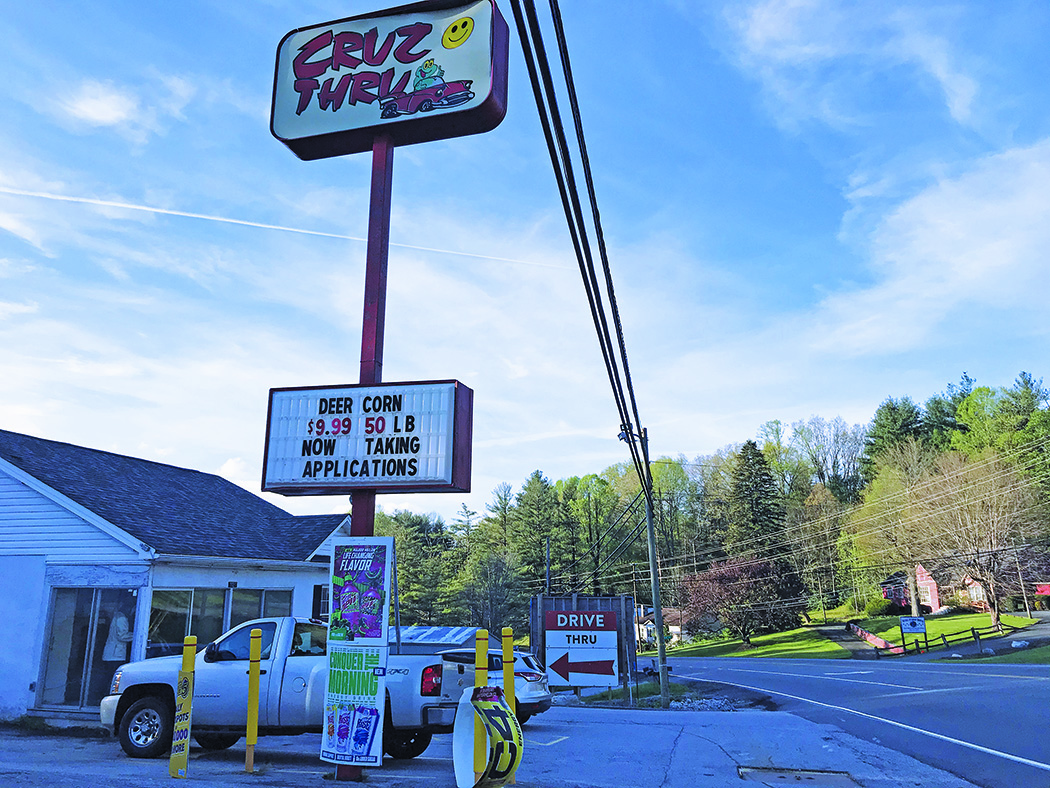
SPRUCE PINE — Take a drive around Mitchell County and you’ll see plenty of beautiful sights ranging from nature scenes like tranquil rivers and streams to the well-kept storefronts of small businesses.
As more of those small businesses open their doors to more customers as pandemic restrictions ease, another sight has become commonplace— signs that say now hiring, apply within.
While a myriad of Mitchell County businesses are looking to hire, it’s a problem that isn’t isolated to the region.
A recent report from the National Federation of Independent Business found that an estimated 42 percent of small businesses nationwide said they had jobs they couldn’t fill this past March— a record high.
That same NFIB March report also found that 28 percent of business owners reported raising compensation while about 17 percent plan to raise compensation in the next three months. Seven percent of owners cited labor costs as their top business problem while 24 percent said that labor quality was the top issue.
“Finding qualified labor is a critical issue for small businesses nationwide,” said NFIB Chief Economist Bill Dunkelberg. “Small business owners are competing with the pandemic and increased unemployment benefits that are keeping some workers out of the labor force. However, owners remain determined to hire workers and grow their business.”
Increased unemployment benefits have become a common citation for the influx of now hiring signs and apparent lack of willing workers. President Joe Biden’s American Rescue Plan put an extra $300 in unemployment checks each week through Sept. 6 on top of the average state unemployment payment of $340 per week.
In North Carolina and South Carolina, however, recipients of those benefits must prove they’re actively looking for work.
For others, the pandemic still poses too many questions to make them feel comfortable or capable of returning to the workplace.
Some have health concerns over returning to work while others are needed at home. A recent household pulse survey from the United States Census Bureau found that more than 6 million Americans are not working because of their need to provide child care.
While small businesses were affected greatly by the pandemic, many big retailers like Walmart thrived amid the chaos, meaning they can pay more, some economists say.
Lynn Minges, President and CEO of the North Carolina Restaurant and Lodging Association, said about 103,000 North Carolinians in the hospitality workforce were displaced due to the pandemic. Many went on to get other jobs with competitive pay at larger businesses, meaning the hospitality industry has been forced to expand its recruiting pool and consider wage hikes.
An amendment to Biden’s $1.9 trillion COVID-19 relief bill that was voted on this past March could have started to turn the tide in the discussion of wages as it would have gradually raised the federal minimum wage from $7.25 per hour to $15 over five years.
The amendment was killed, however, after Senators voted 58-42 against it. Had it passed, individuals working full-time on federal minimum wage would have increased earnings from $15,080 to $31,200.
Providing some relief in the fight for labor is the fact that new U.S. jobless claims tumbled this past month to 576,000, a post-COVID low. Jobless claims peaked at 900,000 in January.
As of the end of March, 16.9 million people were collecting jobless benefits, which was down from 18.2 million earlier that month.
Employers across the nation added 916,000 new jobs in March. The nation’s unemployment rate has also continued to decline, falling from a high of 14.8 percent roughly one year ago to 6 percent.
Many economic analysts believe the best is yet to come for the nation’s economy, including Federal Reserve Chair Jerome Powell, who said in a 60 Minutes interview that he believes the economy appears primed for a post-pandemic boom.
“This growth that we’re expecting in the second half of this year is going to be very strong,” he said. “And job creation, I would expect to be very strong.”