
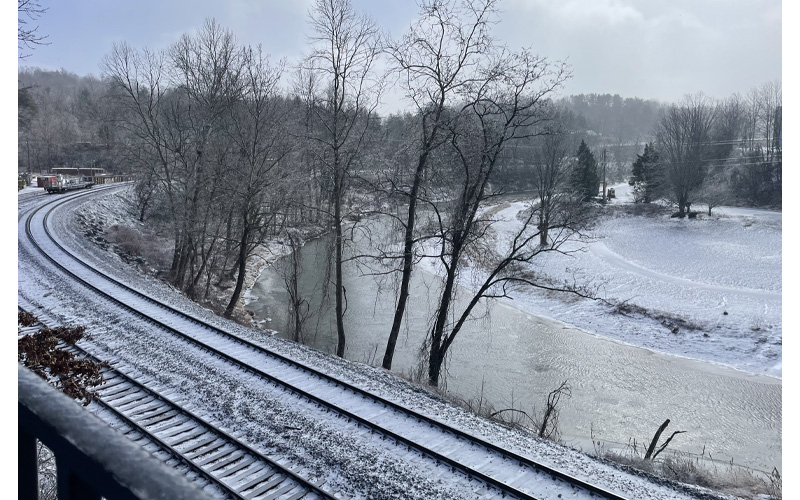
Winter Storm Fern may not have been quite as severe as predicted, but Mitchell County is still recovering from a not-insignificant amount of winter weather over the weekend.
Most local governments had declared a state of emergency by Friday, as did North Carolina Gov. Josh Stein.
Additionally, Mitchell County opened a warming shelter for those in need on Saturday at 152 Ledger School Road in Bakersville.
“Mitchell County encourages residents to check on neighbors, especially the elderly and those with medical needs, during this period of extreme cold,” county authorities said in a release.
The North Carolina Department of Transportation issued a release on Friday explaining its response to the storm and offering tips for surviving the icy roads.
DOT noted that it would be initiating “immediate towing measures,” allowing the state to remove stranded vehicles from the side of the road more quickly than usual when they might serve as a road hazard to other drivers.
Because of this, motorists during winter storm weather who might ordinarily assume that they have some time to go get a friend to help them get their vehicle out of a ditch might get back to discover that it has already been towed.
According to Asheville-based nonprofit Resources for Resilience, for some people, the tense warnings issued by state, local and national authorities in the run-up to the storm last week might trigger residual stress and anxiety left over from Hurricane Helene (downgraded to a tropical storm after slowing down over land).
“Between the headlines and the visible preparation happening around us, it makes sense that people are feeling on edge,” Ann DuPre Rogers, executive director of Resources for Resilience said in a release. “Our bodies and brains are excellent at remembering past stress and scanning for future danger. That is exactly what they are designed to do.”
The organization recommends the following for those who are experience emotional distress when hearing storm warnings:
• Move your body: Take a walk, march in place or engage large muscles by pushing against a wall or lifting something heavy. Movement helps discharge excess stress energy.
• Ground yourself: Sit, stand or lean on something solid. Notice the support beneath your feet, legs or back and allow your body to soften into it.
• Orient to your surroundings: Slowly look around and name a few things you can see or hear. Turning the head and eyes helps the brain reconnect to the present moment.
• Use rhythm: Gently tap the body side to side, sway or rock. Rhythmic movement supports calming pathways in the nervous system.
• Engage the senses: Take a slow sip of water or a warm beverage. Notice temperature, texture and taste as it moves through your body.
• Use your voice: Hum, sing or exhale with sound. Vocalization may stimulate calming responses and ease tension.